Learning happens in the trying.
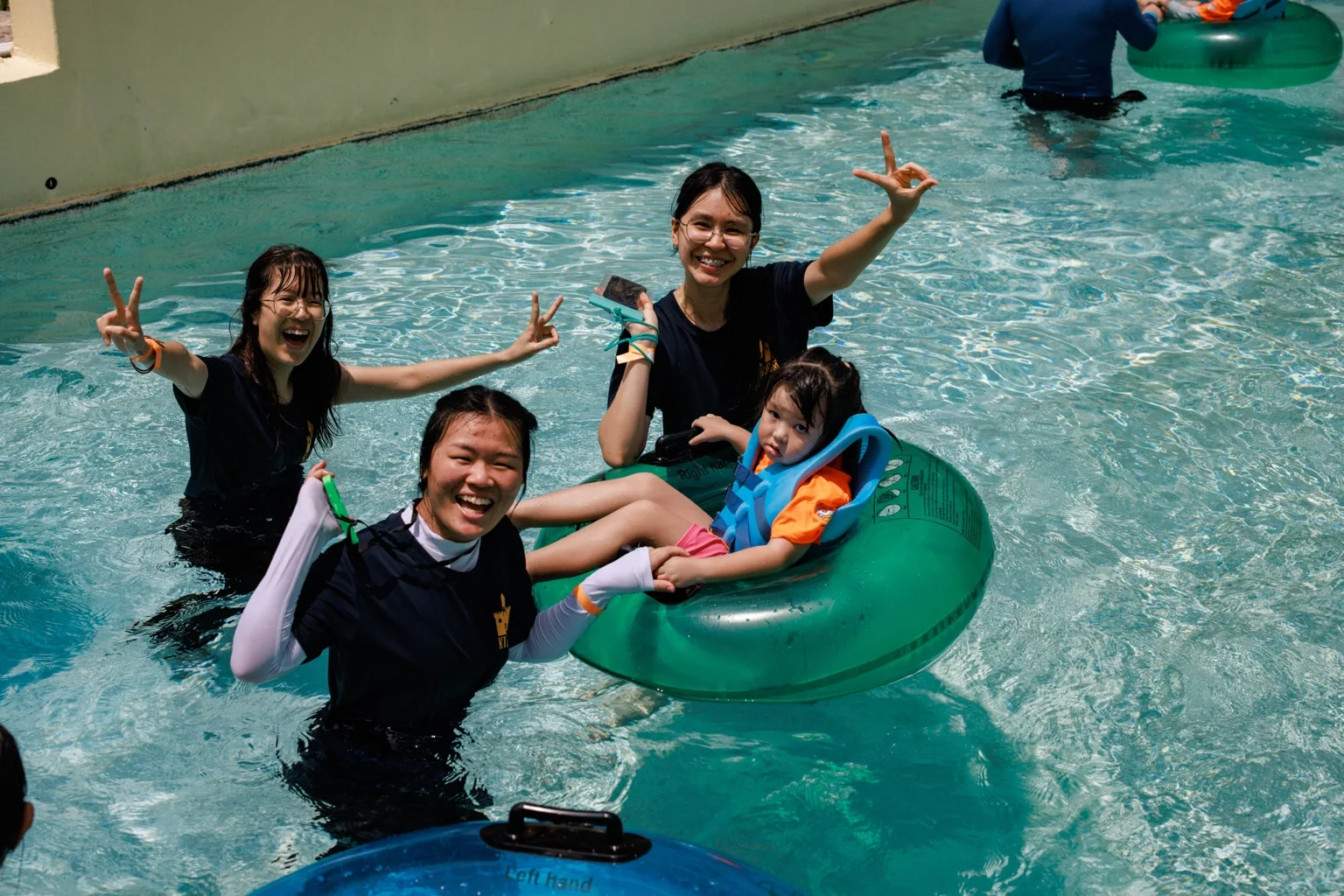
For close to 20 years, Christina has taught children in and around water. Again and again, she has seen that a child often gives their best when they enjoy what they are doing. Play creates a meaningful reason to participate: reach for an object, listen for the next mission, encourage a friend or try one more time.
A first step into the pool, a jump with support or the confidence to move freely may look small to an adult. To the child, it can be a major achievement. The value is not in making an inflated promise; it is in noticing effort, supporting participation and celebrating real progress.
Five things adults can observe
Play
The child is willing to join an activity and try at an appropriate level.
Discover
The child asks a question, notices what happens or adapts after a first attempt.
Celebrate
The child recognises their own effort and encourages someone else.
Care
The child takes turns, follows agreed rules and offers practical help to the group.
Achieve
The child completes a personal challenge or shows courage in attempting it.
Purposeful play still needs clear boundaries.
Learning-through-play activities are not a substitute for formal swimming instruction, lifesaving training or active adult responsibility. The venue, water conditions, children’s ages and confidence, adult roles and package-specific supervision must be checked for each experience.
Questions parents often ask
Does water play teach a child to swim?
Play can support confidence and participation, but it should not be described as a swimming qualification or a replacement for formal instruction.
What if children have mixed confidence levels?
Share this before the event. The activity format, adult participation and package suitability need to be reviewed for the actual group.
What counts as achievement?
It may be joining in, listening to a briefing, trying a new action, helping a teammate or completing a personal challenge. It does not certify independent water safety.