Begin with the learning purpose.
Decide what you want children to practise or notice. It may be courage in trying, curiosity through observation, communication during a team task or care through turn-taking and encouragement. Keep objectives observable and appropriate to the group rather than promising an outcome that one outing cannot guarantee.
Information to include in the brief
Learners
Age band, headcount, water confidence, accessibility or support needs and relevant group dynamics.
Experience
Learning goals, preferred activities, available hours, venue options and the role of water in the programme.
Operations
Teacher and adult responsibilities, package-specific supervision, station rotations, equipment, changing arrangements and weather plan.
A useful proposal should answer
- Which ages and group size is the programme designed for?
- What will children do, notice or practise at each stage?
- Who is responsible for each group and transition?
- What should children and adults bring?
- How are accessibility needs and mixed confidence levels handled?
- What happens if the weather or venue conditions change?
Questions educators often ask
Is this a swimming lesson?
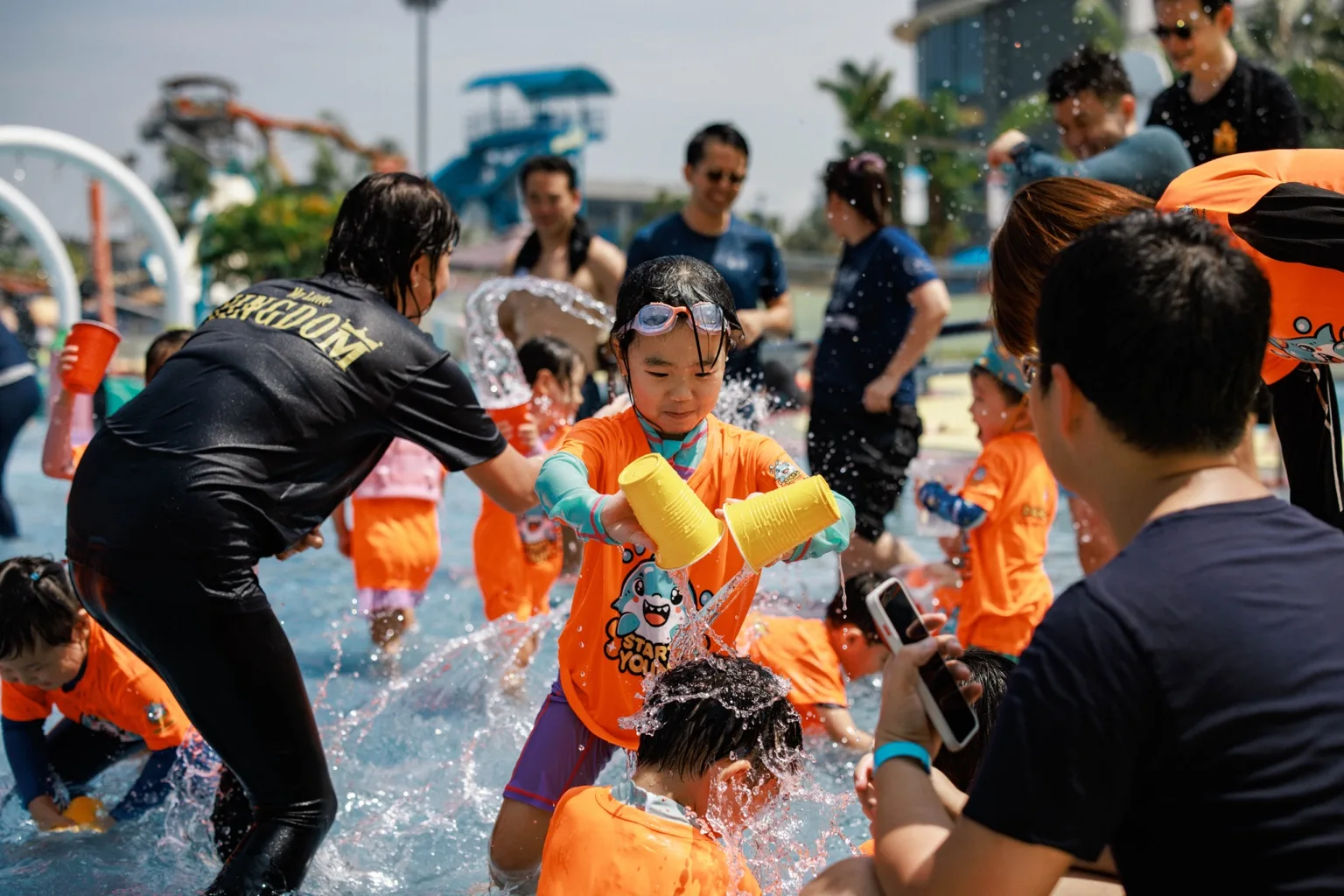
No. A Start Young school experience may support confidence, curiosity, teamwork and participation through play, but it is not presented as a formal swimming qualification.
Can the programme be adapted to our learning goals?
Yes. Share the age group, headcount, available time, venue and objectives so the team can propose suitable missions, activities and logistics.
Which venues are available?
Options may include Wild Wild Wet, Happy Fish Bedok and suitable school or partner settings, subject to programme, venue and date approval.